


There is a fish farm in southern Spain that does not feed its fish.
The farm is called Veta La Palma. It sits on 27,000 acres of restored wetlands in Andalusia, land that was drained by Argentine cattle ranchers in the mid-20th century, stripped of its ecology, and turned into a production machine. The drainage canals were an engineering feat. They were also an ecological disaster, killing 90% of the bird population and polluting the river that fed into the sea.
In 1982, an environmental company bought the land and did something counterintuitive. They reversed the drainage canals.
What grew back was something extraordinary. The wetlands returned. The fish populations returned. And the man running the operation, a biologist named Miguel who had come from conservation work in Africa, told anyone who would listen that he knew nothing about fish. What he knew, he said, was relationships.
The American chef Dan Barber visited Veta La Palma and asked Miguel the question every food professional asks: what is the feed ratio? How much feed does it take to produce a pound of fish?
Miguel's answer: there is no feed. The system feeds itself.
Barber rounded a corner and found tens of thousands of flamingos, their pink bellies full. He asked Miguel if the birds were eating his fish. Miguel said yes, about 20% of the yield goes to the birds. Barber asked if that was a problem.
Miguel said no. That's how we measure success.
A farm that doesn't feed its animals. A fish farm that is also the largest bird sanctuary in Europe. And the water leaving the system is cleaner than the water that entered it.
The Question We've Been Asking Wrong
For the past half century, industrial agriculture has operated on a single organizing question: how do we produce more, more cheaply? Feed grain to herbivores. Apply pesticides to monocultures. Add chemicals to soil. The system optimizes for output and treats everything else, soil health, water quality, biodiversity, as externalities.
Dan Barber calls this a liquidation process. You are not building productivity. You are drawing down a balance.
The same logic has governed energy production. Extract, combust, distribute, repeat. The land underneath a conventional solar farm is typically compacted, shaded, and ecologically dead. The farmer who leases to a utility-scale developer gives up the land entirely. The grid that delivers the power is a single point of failure stretching thousands of miles.
A Different Question
Miguel's insight at Veta La Palma was not technical. It was conceptual. He did not ask how to maximize fish production. He asked how to restore the conditions under which the system could sustain itself. The fish, the birds, the clean water, the productive land: those were all consequences of getting the relationships right.
Agrivoltaic solar asks the same question about energy and agriculture.
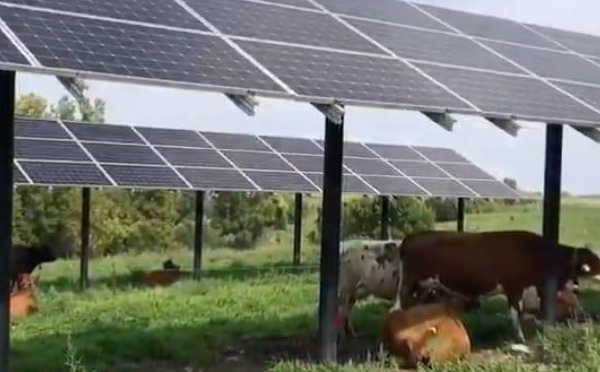
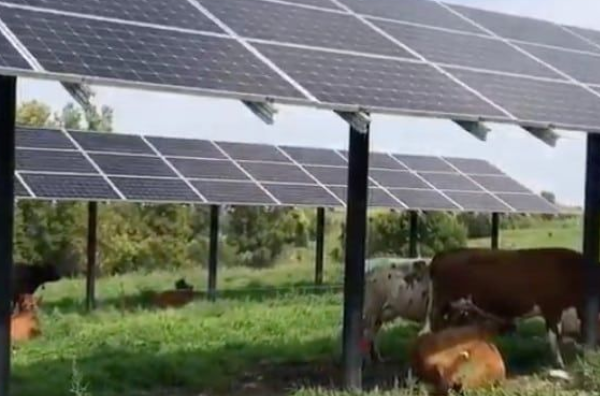
When solar arrays are installed above active farmland rather than replacing it, the relationship between energy production and food production becomes generative rather than extractive. The panels reduce soil moisture evaporation. They moderate temperature extremes that stress crops. The farmer continues farming, earning land lease income that can run three to six times the national average per acre, while the solar array generates clean power for co-located data centers or community microgrids.
The land is not liquidated. It is made more productive.
What Miguel Understood
Barber left Veta La Palma with a different way of thinking about food. Not just what we eat, but the systems that produce it, and whether those systems are drawing down or building up the conditions that make them possible.
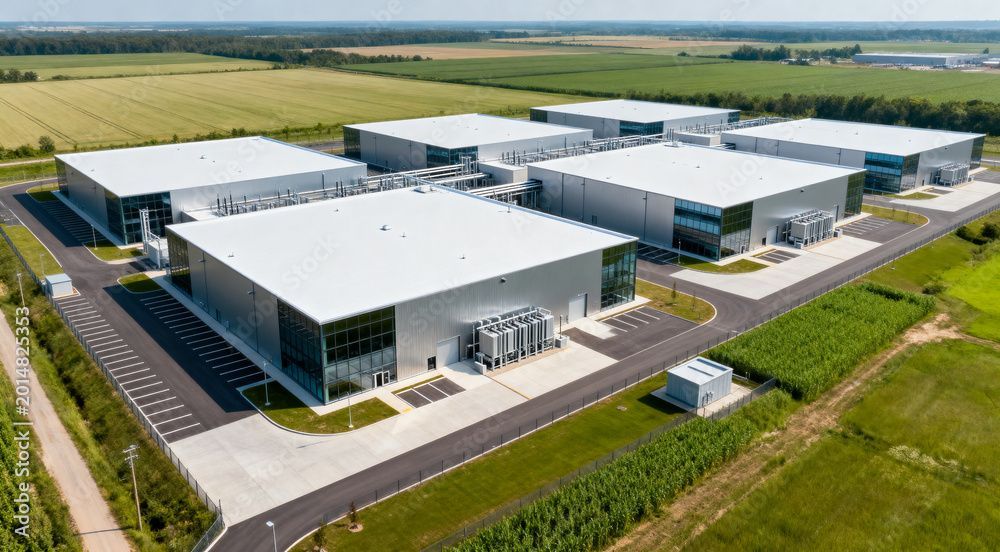
At Solar DC Power, we are planning to develop energy systems that ask the same question Miguel asked. Not how do we extract the most from this land, but what relationships, between soil and sun, between farmers and data centers, between local energy production and community resilience, produce outcomes that are better for everyone in the system, including the flamingos.
The water should leave cleaner than it arrived.
Inspired by Dan Barber's TED Talk: How I Fell in Love with a Fish
https://www.ted.com/talks/dan_barber_how_i_fell_in_love_with_a_fish