By Gerald DeVito
•
June 19, 2026
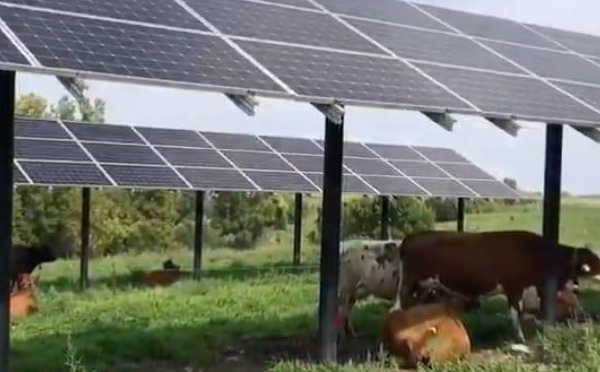
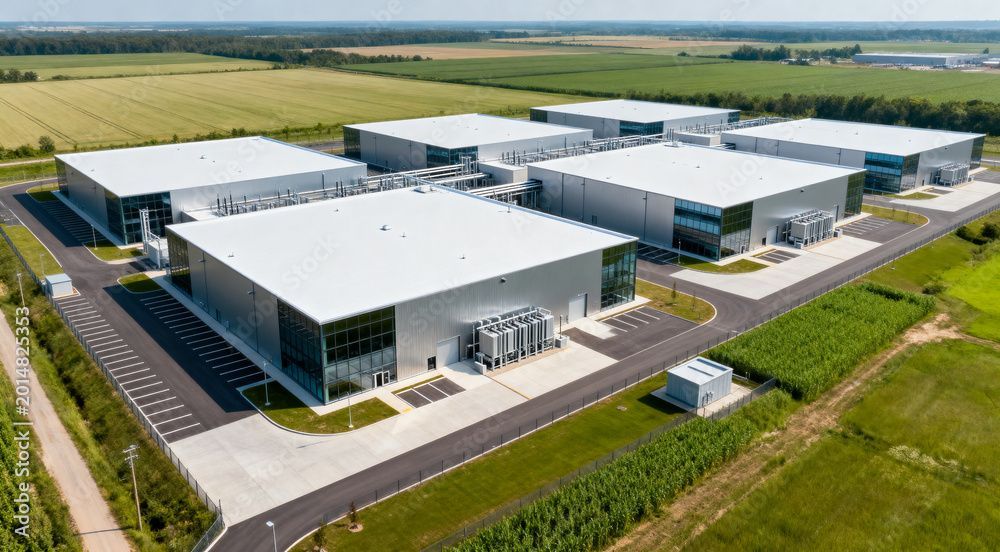
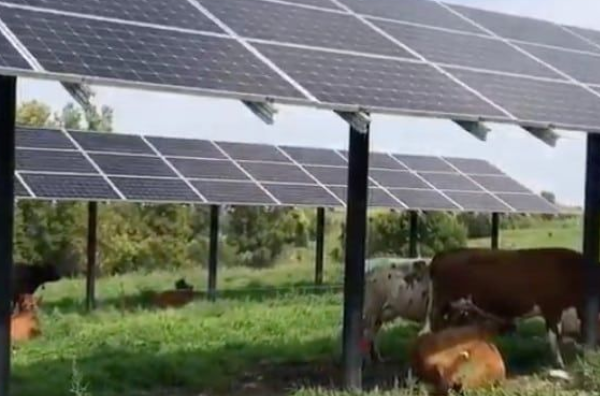
The Hidden Cost of Waiting: How Engineering Experience Saves Years on Data Center Permitting How 42 years of civil engineering experience translates into faster permitting and fewer costly surprises. The data center industry is in a race. Artificial intelligence, cloud computing, and the digitization of nearly every sector of the global economy have created a demand for computing power that existing infrastructure cannot meet. Developers are scrambling to site, permit, and build new facilities as fast as capital allows. But capital has a clock. Every month a project sits in a permitting queue is a month of interest payments on land, equipment financing, and investor capital. A project that takes three years to permit instead of one does not just cost time. It costs millions of dollars in carrying costs before a single kilowatt-hour is generated. Most data center developers are technologists or financiers. They are exceptionally good at what they do. But permitting is a different discipline, and colliding with a regulatory agency mid-project is one of the most expensive mistakes in development. What Permitting Actually Requires Permits are not just paperwork. They are the product of relationships, sequencing, and a thorough understanding of what each agency needs to say yes. Environmental reviews, utility easements, stormwater management plans, zoning variances, and local land use approvals each follow their own timeline and their own logic. Miss the sequence, and you can find yourself waiting on an approval that was contingent on something you submitted six months too late. I spent 42 years as a civil engineer, split between location design and construction management. That included transportation infrastructure with WSDOT in Portland, Oregon, and water and sewer projects with the City of Wilmington, North Carolina. In that time I learned that the agencies approving your project are not obstacles. They are stakeholders. Understanding what they need, and giving it to them correctly the first time, is the difference between a project that moves and a project that stalls. Why Agrivoltaic Data Centers Are Permittable Solar DC Power's model was designed from the ground up with permitting in mind. Agrivoltaic arrays sited on active farmland in rural Georgia and the Carolinas operate behind the meter with no grid interconnection required. That single design decision eliminates one of the most time-consuming regulatory processes in renewable energy development, the interconnection queue, which in some states runs three to five years. The land remains in agricultural production. The farmer continues farming. There is no conversion of farmland to industrial use, which means the project does not trigger the land use reviews that stop conventional utility-scale solar projects in their tracks. The data center co-located on the same property benefits from power that is generated, stored, and consumed on-site. How a Civil Engineer Assembles the Team Most people think of a civil engineer as someone who designs roads or bridges. That is part of it. But the civil engineer's most important role on a complex project is as the integrator, the person who assembles the right team, sequences their work correctly, and keeps every discipline coordinated from site selection through construction completion. On a data center project, that team typically includes a geotechnical engineer to assess soil bearing capacity and foundation requirements, a structural engineer to design the building and equipment foundations, an electrical engineer to design the power systems, a mechanical engineer for HVAC and cooling, and an environmental consultant to navigate wetlands, stormwater, and any site-specific regulatory requirements. The civil engineer does not replace any of them. He coordinates all of them. One coordination requirement that is easy to overlook is the server cooling system. Data centers generate substantial heat, and the mechanical engineer selected for the project must have specific experience with high-density cooling systems, not just conventional commercial HVAC. The civil engineer works with the architect early in the team selection process to ensure the right mechanical engineer is brought on board before design begins, not after a general contractor has already made that choice based on lowest bid. The architect handles building design and local building code compliance. The civil engineer works alongside the architect from the beginning, ensuring that site grading, utility connections, stormwater management, and access roads are designed in parallel with the building, not as an afterthought. When those two disciplines are aligned early, the permit package that goes to the local jurisdiction is complete and internally consistent. Reviewers can approve it. When they are not aligned, the permit package comes back with comments, and the clock starts over. Water: The Hidden Infrastructure Challenge Data centers have two areas of public contention in rural communities: water and electricity. Both must be addressed early in the planning process, before site selection is finalized and before the first community meeting is held. A data center outside Atlanta recently consumed 30 million gallons of water, effectively creating a localized desert around the facility. Thirty million gallons is roughly six acre-feet, enough to fill an acre-sized pond six feet deep. A pond of that scale on a rural site would likely require fencing and its own permit approval process, adding time and cost to a project already navigating multiple regulatory workstreams. Rural areas present a unique set of sensitivities around both resources. Farmhouses typically rely on private wells for drinking water. Crops depend on ponds, irrigation systems, and pumps that have served families for generations. A data center that strains those resources will face community opposition that no permit application can overcome. Addressing water and power demand transparently, and designing systems that coexist with rather than compete against existing rural infrastructure, is not just good engineering. It is the prerequisite for earning the community's trust. Solar DC Power's cooling approach addresses the water challenge directly. Our system is designed to cool and recirculate water rather than consume it, substantially reducing total water demand. Two options are under evaluation. A closed-loop pond system at reduced depth, approximately three feet, minimizes the permitting footprint while providing thermal mass for cooling. Alternatively, a field of a deep well or wells equipped with filters and a backwashing system could prove cost-competitive and would have the added benefit of providing the surrounding community with a source of clean water, a genuine contribution to the rural areas where we plan to develop. Cost modeling for both options will need to be generated early in the planning process. The civil and mechanical engineers, working with the architect, will be responsible for that analysis. It is one more reason why assembling the right team at the start is not a formality. It is a financial decision. Keeping the Project on Schedule Permitting delay is almost always a sequencing problem. An agency cannot approve a grading permit until the stormwater plan is complete. The stormwater plan cannot be finalized until the grading plan is set. The grading plan cannot be set until the geotechnical report is in hand. Each dependency has a lead time, and an experienced civil engineer knows how to run those workstreams in parallel rather than in series. On Solar DC Power projects, the civil engineer also manages the critical relationship between the energy infrastructure and the construction timeline. The agrivoltaic array, battery storage system, and Bloom Energy solid oxide fuel cells must be designed, permitted, and on track for delivery before the data center building reaches the point where it needs power. That coordination happens between the civil engineer, Bloom Energy, and our EPC partners. It is not something that can be improvised late in a project. It has to be built into the schedule from the first day of planning. The difference between a project that permits in eight months and one that permits in two and a half years is rarely the complexity of the project. It is usually whether someone with engineering experience was managing the sequence from the start. Solar DC Power brings that discipline to every project we plan to develop. It is not a feature. It is the foundation. The Value of Experience There is no substitute for having stood on a job site while a regulatory hold was issued, worked through the resolution, and kept the project moving. That experience lives in the details, knowing which agency has jurisdiction over a drainage easement, how to sequence a stormwater permit with a building permit, when to request a pre-application meeting and what to bring to it. Solar DC Power brings that experience to every project we plan to develop. For investors and data center operators evaluating sites, it means a realistic permitting timeline built on engineering judgment rather than optimism. Time is money. In data center development, it is a great deal of money. Getting permitting right from the start is not a formality. It is a competitive advantage .