MICROGRIDS
Microgrids: Empowering Communities and Enhancing Resilience
As of the beginning of 2023, there were approximately 692 microgrids within the United States. As the country (and much of the world) strives to reduce its dependence on fossil fuels and other non-renewable energy sources while improving resilience in extreme weather conditions, the use of Microgrids will likely expand worldwide. If you’re interested in sustainability and renewable energy, microgrids should be on your radar.
A Microgrid is a group of interconnected loads and distributed energy resources that acts as a single controllable entity with respect to the grid.
Most sustainable Microgrids rely solely on renewable energy sources. These independent energy systems have clearly defined electrical boundaries and can connect to a main power grid or operate completely independently of larger energy systems (macrogrids). Microgrids consist of power systems, energy storage systems, control systems, and distribution infrastructure. If non-renewable energy sources are part of the power systems, then the energy storage systems and control methods can work to utilize renewable energy first. This, in turn, can reduce the need for non-renewable energy sources while cutting down on greenhouse gas emissions and other environmental damage.
MICROGRIDS, THE FUTURE
Microgrids can vary in their operation based on how they are configured and the specific energy sources they use. However, most Microgrids will consist of some combination of the following:
- Power sources – These are the resources that produce energy for the microgrid itself. These can be distributed energy resources (such as wind turbines and solar panels) but may also consist of some non-renewable options such as Solid oxide fuel cells (SOFC) as produced by Bloom Energy, all depending on the configuration.
- Energy storage systems – As the phrase implies, an energy storage system is a device (such as a battery) where energy created can be effectively stored until demand arises. Energy storage systems can also be useful for storing power for use when there is a pause in energy generation (as may be the case at night with solar power resources). However, SOFCs can generate energy 24/7, and they produce little of no CO2.
- Control system – Microgrids also have control systems, which may consist of load management tools, metering devices, and other tools that help the Microgrid operate efficiently. Additionally, a control system may handle tasks like connecting and disconnecting the microgrid to a local macrogrid as well as providing data on production and consumption.
- Distribution infrastructure – Every Microgrid relies on a distribution infrastructure that is responsible for transferring power directly from its storage systems to local power distribution lines within the Microgrid, and transformers so it can be used. An interconnection with the Macrogrid is constructed but a backlog of permits for the functionality of that interconnection exists. As the macrogrid becomes overburdened by demand, upgrades will be priortized so available energy may be used, rather than permitting and constructing monstrous fossil fuel generators.
BENEFITS OF MICROGRIDS
Microgrids can easily be configured to prioritize renewable energy sources over non-renewable sources. This means that even if a microgrid is set up to generate power using a combination of renewable and non-renewable sources, the energy storage systems and control methods can work to utilize renewable energy first. This, in turn, can reduce the need for non-renewable energy sources while cutting down on greenhouse gas emissions and other environmental damage.
By creating, storing, and distributing their own energy, Microgrids can play a central role in reducing pressure on primary Macrogrids nationwide and globally. This may be especially true during times of crisis, such as when a severe weather event causes a major power outage or disruption within a local macrogrid. Microgrids will continue to function with impunity from a power outage.
When this happens, Microgrids can be relied upon to reduce pressure on primary grids while providing a reliable supply of power for the most critical needs. This particular benefit of microgrids can be experienced anywhere but is perhaps most notable in areas that are at a higher risk of natural disasters or remote areas with limited access to energy from macrogrids.
Finally, because they allow for better management of local energy resources, Microgrids can make a considerable difference in overall efficiency by helping to balance power supply and demand. In addition, microgrids can be configured to allow adjustments to energy usage based on specific price signals, which could lower energy costs in some areas.
All of this, combined with the simple fact that Microgrids are the more sustainable energy option, makes it evident why more of these solutions continue to be installed across the country.
Onsite Energy Generation That Powers Atlanta's Future
Without Waiting for the Grid
The Power Problem Holding Atlanta Back
Atlanta is growing faster than its grid can keep up. Every week, another business discovers that utility timelines for new commercial service can stretch 18 months or longer. Data centers are waiting years for high-voltage connections. Manufacturers and logistics operators are watching planned facilities sit idle because the power simply isn't there yet. And for companies relying on consistent, clean energy to power critical operations, the traditional answer, wait for the utility, is no longer good enough.
That's where Solar DC Power comes in. We are an Atlanta-based energy infrastructure company led by a licensed Professional Engineer with 35 years of experience designing and deploying power systems across Georgia and the Carolinas. We design onsite Microgrid systems, and agrivoltaic solar arrays paired with battery storage, that let businesses generate and control their own electricity, independent of the strained public grid. Whether you're running a data center, a manufacturing operation, or a multi-site enterprise portfolio, we design the onsite energy generation system your facility needs to stop waiting and start operating.
Solar DC Power was founded on a simple but powerful idea: the communities of Georgia and the Carolinas deserve energy infrastructure that works for them. Not for distant utility shareholders. Not for out-of-state developers. For the farmers, businesses, and local economies that make this region extraordinary. With five years of focused regional development and three decades of engineering behind every project, we bring both the vision and the technical depth to make onsite clean energy real.
What Atlanta's Energy Crisis Is Actually Costing You
The strain on Atlanta's climate infrastructure is not abstract. Georgia Power's transmission network is under genuine pressure, and the demands from AI data centers, EV charging buildout, crypto centers, and industrial expansion are intensifying every month. Businesses that once planned on straightforward utility connections are facing hard realities: grid interconnection queues, skyrocketing demand charges, and no clear timeline for relief.
For data center operators and enterprises in the Atlanta metro, MARTA corridors, and tech corridors into North and South Carolina, this creates three costly problems. First, new facilities can't open, or operate at capacity, while waiting for utility power. Second, existing operations face escalating rate volatility and demand charges that undermine financial forecasting. Third, the growing push for corporate ESG (Environmental, Social, and Governance) commitments is outpacing what the conventional grid can offer. Buying renewable energy credits is not the same as generating clean power at your site.
On-site energy generation, Solar DC Power, and Bloom Energy, through solar microgrids, fuel cells, and battery storage, solve all three. It eliminates grid dependency for baseline and critical loads. It stabilizes energy costs over 20-25 year fixed-rate structures at likely substantially lower than macrogrid costs, It turns a liability, energy unpredictability, into a competitive asset. And in Georgia and the Carolinas, where sunlight averages 5.2 to 5.6 peak solar hours per day, the resource is abundant, consistent, and cost-saving. You don't have to choose between reliability and sustainability. With the right system, you get both.
Solar DC Power focuses on the Georgia and Carolina markets because regional expertise matters in this business. We understand the permitting environment across dozens of rural counties. We have relationships with cooperative utilities, Solar Design EPCs, and state energy offices that accelerate project timelines. We know which counties welcome development and how to structure community benefit agreements that make projects truly welcome, not just tolerated. From Atlanta's northern suburbs to the Midlands of South Carolina, to the rural farms just outside Atlanta's Hartsfield–Jackson International Airport, our focus means faster approvals, fewer surprises, and better outcomes for our clients.
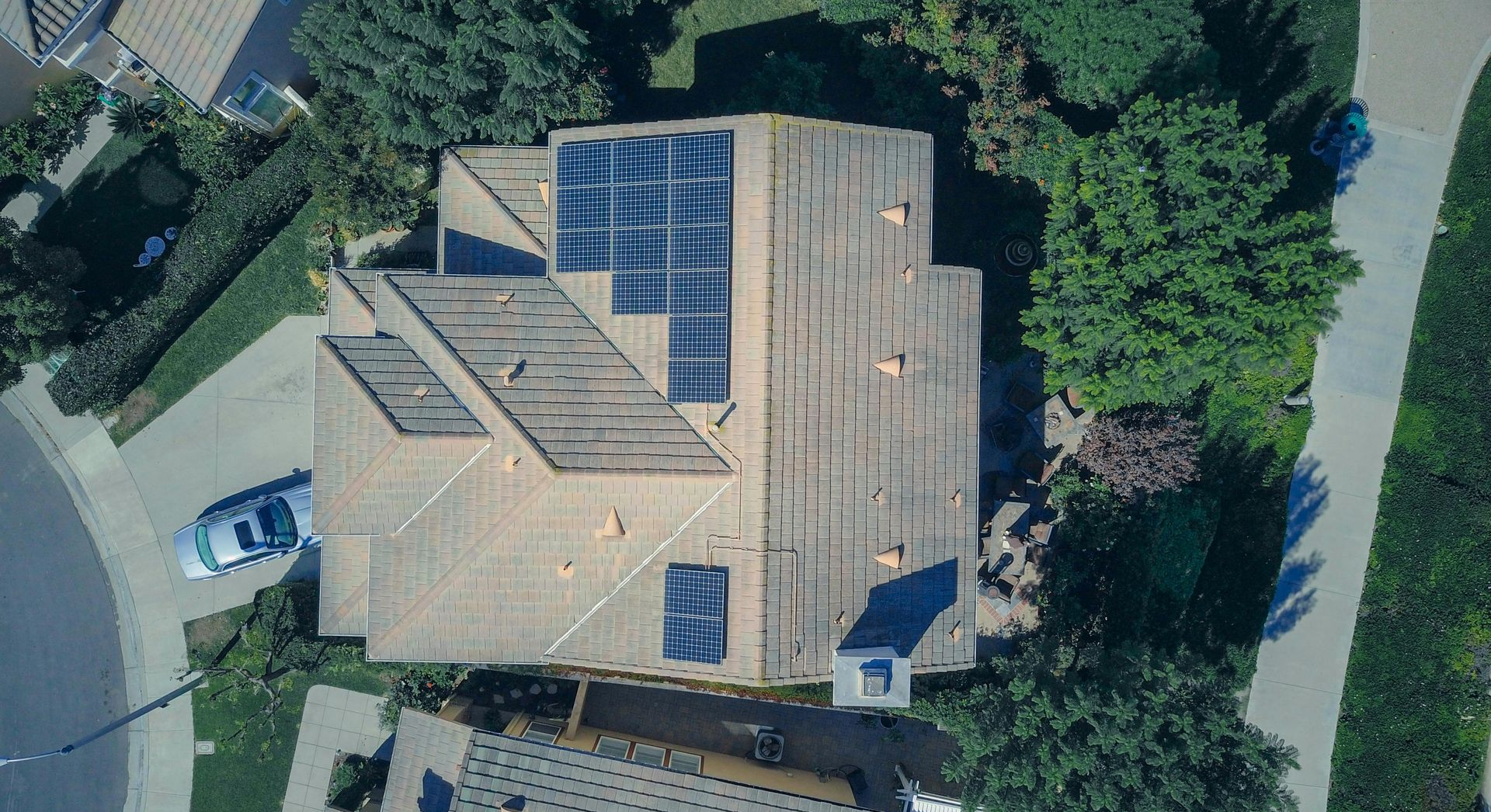
Any new technology will face challenges when being set up and implemented on a large scale.
https://www.utilitydive.com/news/oregon-legislature-passes-first-in-nation-microgrid-framework/752932/
One of the biggest obstacles in the integration of microgrids into our existing energy system, for example, is the fact that they are highly customised systems with very specific variables for each project. With so many considerations to keep in mind (including energy sources, site locations, and other needs), designing and constructing a
microgrid can be a major undertaking, with no shortage of red tape along the way. Herein is why a transparent consultation with
Solar DC
Power and their partners is vital to a thriving and lasting project.
Meanwhile, costs associated with the design and installation of a
microgrid can be lofty, which can make getting approval for these projects challenging in various areas. The good news, however, is that costs should decrease over time as technology improves and
microgrid integration becomes more widespread. And costs are more than compensated by the rising costs and unreliability of the macrogrid.
The Solar DC Power Difference: Engineering-Led, Community-Rooted
Most energy companies bring you a proposal. Solar DC Power brings you a former Professional Engineer currently being reinstated. Our founder held a PE license in NC for 35 years, prepared site designs, and managed construction. He brings this experience to commercial, industrial, and utility-scale projects throughout Georgia and the Carolinas. He is currently applying for licensure reciprocity from NC to GA. That depth of experience means we don't guess at your load requirements, your interconnection strategy, or your battery storage sizing. We calculate it, model it, and stand behind it.
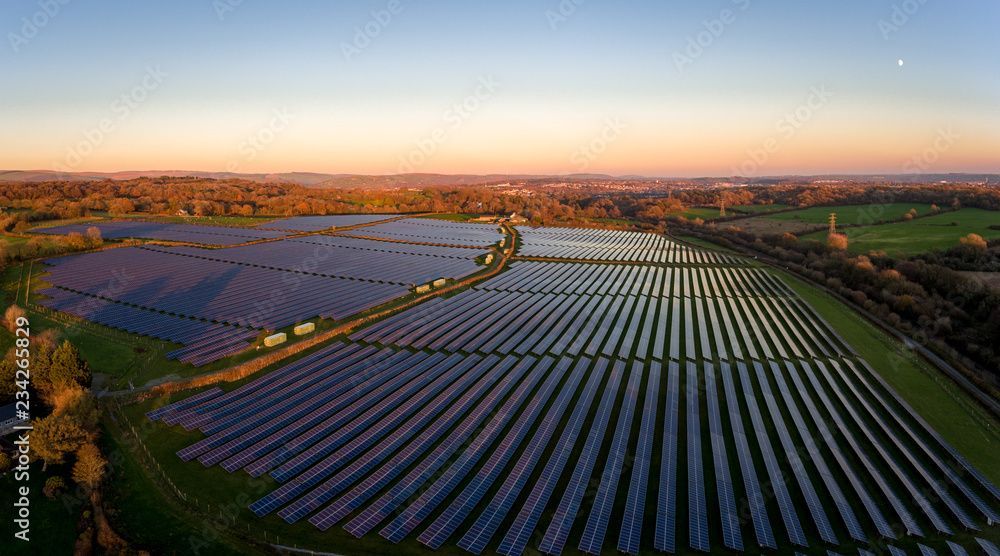
Our Microgrid systems are built on a voltaic foundation — solar arrays covering roofs and parking lots, EV Chargers, and we partner with companies that may provide alternative onsite energy generation with noncombustible solid oxide fuel cells, provided by Bloom Energy, that generate power while keeping land in productive agricultural use. This isn't a gimmick. It's a breakthrough in land efficiency that makes rural data center sites economically viable. For enterprise clients, it means access to large land parcels in Georgia and the Carolinas where utility-scale solar can co-exist with livestock grazing, specialty crop production, and active farming, reducing community opposition and providing farmer partners with meaningful income streams. For the data center, it means power that is generated on-site, stored in co-located battery systems, and delivered without grid congestion.
Solar DC Power focuses exclusively on the Georgia and Carolina markets because regional expertise matters in this business. We understand the permitting environment across dozens of rural counties. We have relationships with cooperative utilities, independent power producers, and state energy offices that accelerate project timelines. We know which counties welcome development and how to structure community benefit agreements that make projects truly welcome, not just tolerated. From Atlanta's northern suburbs to the Midlands of South Carolina, our regional focus means faster approvals, fewer surprises, and better outcomes for our clients.
Real Results for Georgia and Carolina Businesses
One of the most powerful outcomes our clients describe is not kilowatt-hours saved or demand charges avoided - though those numbers are significant. It's the feeling of control. When a business or data center operator knows exactly where their power comes from, exactly what it will cost for the next 25 years, and exactly how it will perform under peak load, something fundamental shifts. They can plan. They can grow. They can make commitments to customers and investors that they couldn't make before.
In rural areas, farmer partners in our program describe a similar transformation. For generations, Georgia and Carolina farm families have watched their land become less economically viable - squeezed by commodity prices, rising input costs, and corporate agricultural consolidation. A solar lease that generates $1,000 or more per acre annually, combined with continued agricultural operations on the same land, changes the math for a family farm. It keeps land in agriculture. Microgrids provide that same sense of security for small businesses. Agrivoltaics keeps families on land they've worked for generations. Microgrids keeps mom and pop businesses from going bankrupt after the macrogrid power outage. And Agrivoltaics produces clean food - raised without growth hormones, antibiotics, or glyphosate herbicides, alongside the clean energy that powers the data center above. That's not just a business story. That's a story about the kind of Georgia and Carolina we want to leave to the next generation.
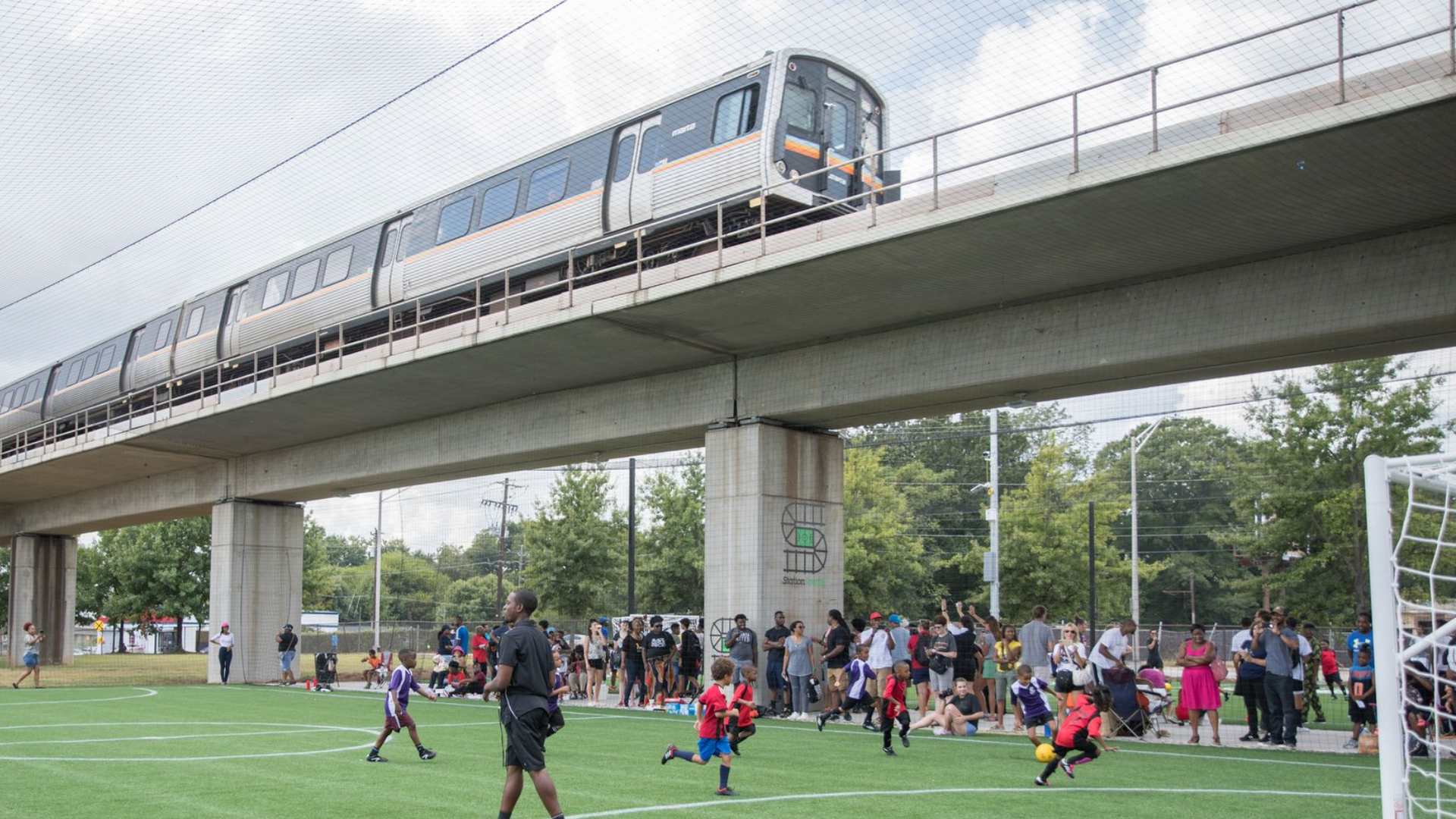
MARTA TOD as a Microgrid: What's Possible
When Transit Meets Clean Power
Atlanta's transit corridors are changing fast. As MARTA expands its Transit-Oriented Development (TOD) program, building mixed-use communities directly around rail and bus rapid transit stations, a critical question emerges for developers and planners alike: How do you power a community designed for the future using infrastructure built for the past?
The answer, increasingly, is Microgrids.
At Solar DC Power, we see MARTA TOD projects not just as real estate opportunities, but as living proof of what distributed energy can do at scale. These dense, walkable, mixed-income communities sit at the intersection of sustainability goals, energy resilience needs, and community investment, making them nearly ideal candidates for an integrated Microgrid solution.
Transit-Oriented Developments are built around density and connectivity. Residents, commuters, retailers, and offices share the same footprint — which means their energy demands are layered, predictable in pattern, and substantial in volume. That's exactly the kind of load profile where a Microgrid thrives.
A well-designed Microgrid at a MARTA TOD site can integrate rooftop and canopy solar, battery energy storage, EV charging for residents and commuters, and smart energy management, all operating as a unified system. During peak grid demand or an outage event, the microgrid islands itself, keeping lights on, elevators running, and EV chargers active without drawing from the broader utility grid.
For a MARTA station community, that kind of resilience isn't a luxury. It's a selling point, a sustainability credential, and increasingly - a financing advantage.
The Considerations: What to Plan For
No project of this scale comes without complexity. Here's what developers and planners should think through carefully — and where Solar DC Power brings experience to the table.
Upfront Capital and Financing Complexity: Microgrids require meaningful upfront investment in solar panels, battery storage, switchgear, and controls infrastructure. For TOD projects that already carry complex financing stacks — including tax credits, public funding, and affordability requirements, layering in Microgrid financing requires careful structuring. The good news: federal incentives under the Inflation Reduction Act, including the Investment Tax Credit (ITC) and USDA REAP grants, can significantly offset costs. Solar DC Power works with clients to identify and stack available incentives. Also,
Utility Interconnection and Permitting; Georgia Power's interconnection process for grid-tied Microgrids can be time-consuming. For TOD projects with compressed development timelines, this is a real consideration. Engaging early — and working with a team that knows the local utility landscape is essential. We've navigated this process across Georgia and can help set realistic expectations from day one.
Site Design Coordination; Integrating a Microgrid into a TOD master plan requires early coordination between the energy team, the architect, and civil engineers. Conduit routing, rooftop load capacity, and substation placement, these decisions are much easier (and cheaper) to make in design development than during construction. Solar DC Power offers early-stage consulting to help development teams build the microgrid into the project from the ground up.
Ongoing Operations and Maintenance; A microgrid is not a set-it-and-forget-it system. It requires active monitoring, periodic maintenance, and occasional battery replacement over a 20–25 year lifespan. This can be addressed through a third-party O&M agreement, which Solar DC Power also may provide, but it should be factored into the long-term operating pro forma.
Regulatory and Utility Rate Structure: Georgia's regulatory environment for Microgrids is still evolving. Depending on how energy is distributed across the TOD site, especially if crossing property lines or serving multiple utility customers, there may be regulatory considerations around becoming an energy provider. Our team stays current on Georgia Public Service Commission developments and can help you structure the system appropriately.

HERO
MARTA's TOD program is building the communities Atlanta needs — dense, connected, affordable, and sustainable. The missing piece in most of these projects is an energy system that matches that ambition. A solar Microgrid doesn't just power the buildings. It makes the whole development more resilient, more sustainable, more financially sound, and more aligned with the values that make TOD worth building in the first place. And Bloom Energy's solid oxide fuel cells will be available to ensure 24/7 power in all circumstances.
Solar DC Power is ready to help make that happen. Whether you're in early feasibility, mid-design, or retrofitting an existing MARTA TOD site, we have the expertise, relationships, and technology to bring your energy vision to life.
Our Hero is the Barista in the photo. This is Hamdan. His shift was canceled yesterday when Hurricane Mary came directly over Atlanta. Winds were sustained at 90 MPH, with sheets of sideways rain. Today, the sky is blue, and there's a gentle breeze, but over a million Atlanta residents have no electricity. Hamden lost power yesterday evening, his cell phone fully charged. He rode his bicycle to work, and the only functioning traffic signals were as he approached the Coffee Cafe located in the Microgrid. He parked and locked his bicycle, and walked past a line of EVs, all charging as the owners patronized the coffee shop. Hamdan immediately started making an assortment of Lattes,
Cappuccinos and Espressos, happily serving happy customers, all enjoying the luxuries of electricity.