The pairing of solar panels (photovoltaics) with agriculture, Agrivoltaics, increases land value by adding another source of income to existing land use. The pairing of solar panels with agriculture not only increases income and land values but is quickly becoming a strategy for states to meet their climate and energy goals. Agricultural land used for growing crops, animal grazing, and farmsteads/farm roads accounts for about 43% of the total land in the lower 48 states. Agrivoltaics can create a win-win scenario by offering a unique opportunity to address multiple state priorities simultaneously, including clean energy generation, sustainable agriculture, economic growth, and climate resilience.
THREE MAIN TYPES OF AGRIVOLTAICS
Elevated systems place solar panels directly above vegetation, usually elevated by at least 6 feet. Elevated systems can protect vegetation from extreme weather such as heavy rains and drought and can reduce sun exposure. Crops such as berries, grapes, and apples can be found in elevated systems.
Inter-row systems, vegetation is grown between rows of solar panels rather than beneath them. Typically, inter-row systems do not provide the same level of protection against extreme weather, but crops usually have more access to direct sunlight than in elevated systems. Rows of panels can be spaced out widely enough to allow tractors and other equipment to cultivate vegetation in between. Crops such as grasses, grains, and hardy vegetables (e.g., kale and broccoli) can be found in inter-row systems.
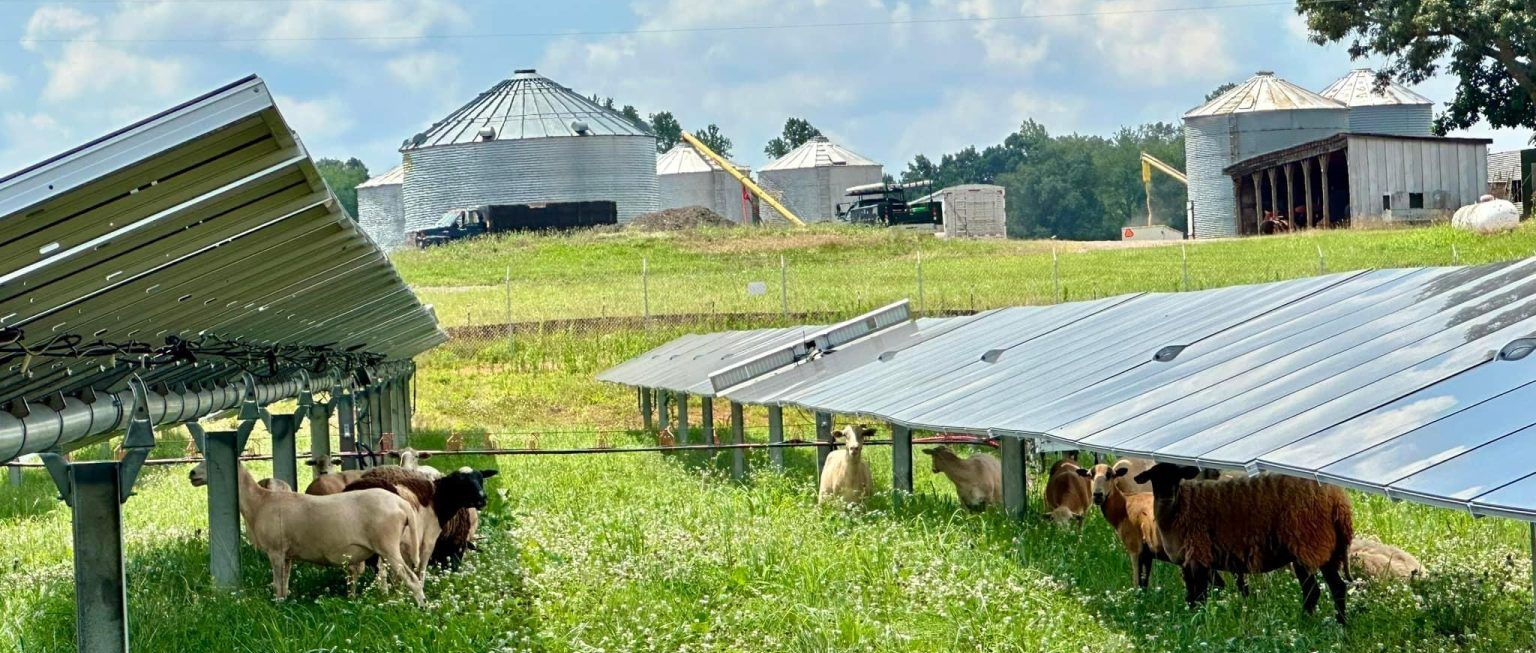
Finally, a combination of Elevated systems and Inter-row systems can provide areas for Beekeeping, livestock grazing, as well as habitat restoration.
Bridging the Gap Between the
Silicon Chip and the Southern Soil
Our team understands this region. We know which counties are open to this kind of development, which corridors have fiber infrastructure nearby, and which farming families are looking for a new way to make their land work harder. If you're a landowner, a developer, or an enterprise client looking to secure a site, we'll help you move from concept to construction without the friction that derails most projects.
Atlanta Airport (ATL), one of the largest in the world, is constructed in a rural area. Farm sites in proximity to ATL would be ideal for access to a data center (DC) powered by Agrivoltaics.
Solar DC Power proposes to mitigate growing opposition to data centers in urban areas and locate DCs in rural areas. Agrivoltaics will power data centers, provide non-corporate farmers with additional income streams, improve food quality by providing food NOT sated with RoundUp, including small megafauna untainted with steroids, antibiotics, and RoundUp, and provide another income stream for farmers. Noise mitigation, a concern of public opposition, will be facilitated in rural areas. And farmers will learn to manage herds, goats, sheep and cattle, to reverse desertification. https://www.ted.com/talks/allan_savory_how_to_fight_desertification_and_reverse_climate_change
THE IMPORTANCE OF AGRIVOLTAICS
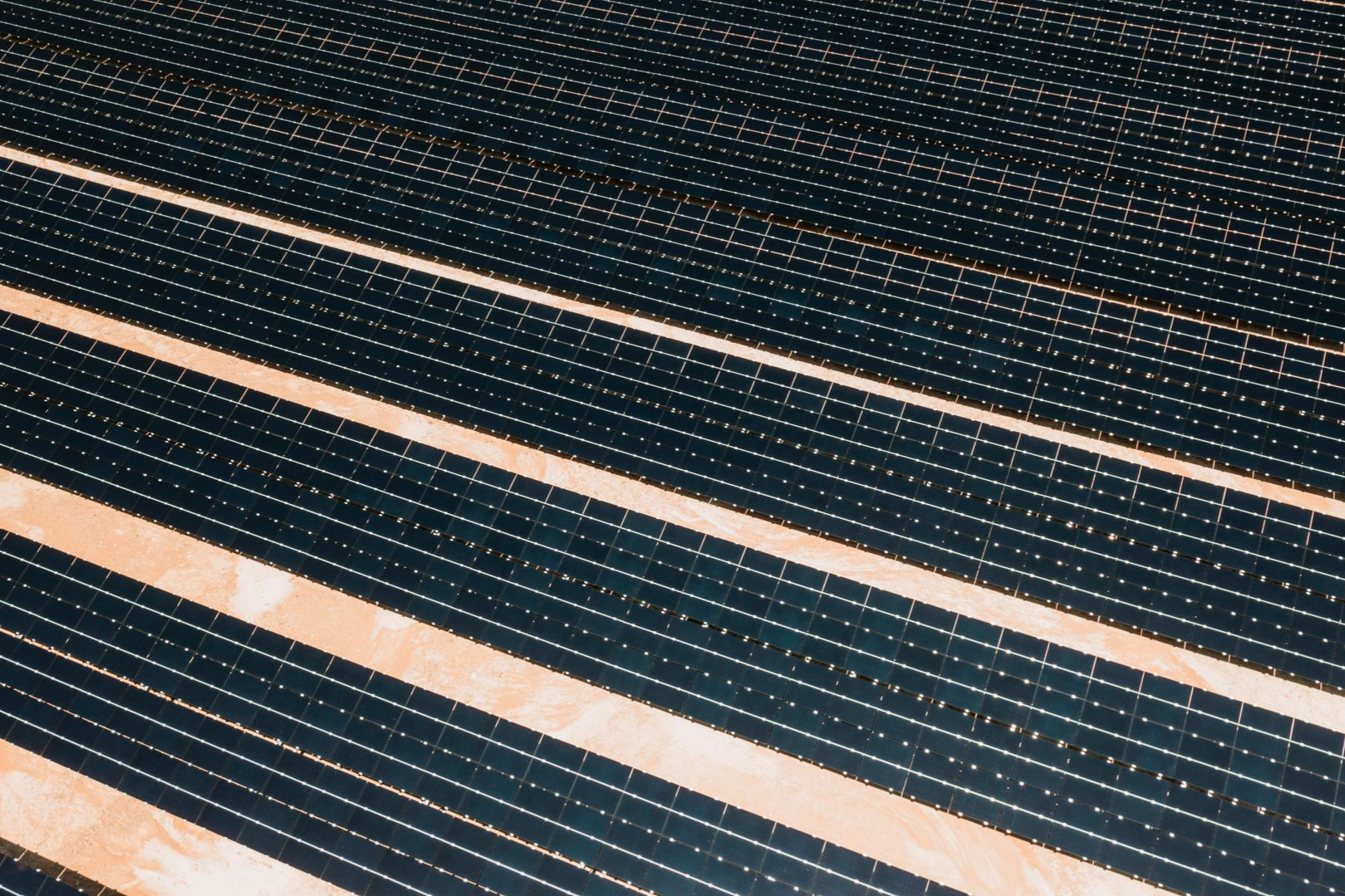
According to a peer-reviewed study published in Sustainability (MDPI, 2021) by researchers Proctor Murthy, and Higgins at Oregon State University, converting less than 1% of U.S. agricultural land to agrivoltaic systems could meet 20% of the country's total electricity generation, while creating over 100,000 jobs and reducing CO2 emissions equivalent to removing 71,000 cars from the road annually. Although traditional solar projects can compete with agricultural land for space, agrivoltaics offers a path to renewable energy expansion that preserves rather than displaces agricultural production. The urgency of agrivoltaic development extends beyond climate — it is now a matter of digital infrastructure necessity. Global data centers consumed approximately 460 terawatt-hours of electricity in 2024. The International Energy Agency projects that figure will exceed 1,000 TWh by 2030 — roughly equivalent to Japan's entire current electricity consumption. This growth is driven almost entirely by artificial intelligence. The macrogrid cannot absorb that demand without massive new generation capacity, and no energy source can scale fast enough to meet it except renewables. Agrivoltaics, deployed at scale on American farmland, is the most viable path forward — regardless of the policy environment in Washington. To put this in layman terms: a single training run for a frontier AI model consumes enough electricity to power an average American home for 14 to 1,400 years. A single data center supporting enterprise AI at scale draws enough power to supply electricity to 20,000 to 200,000 homes — continuously, around the clock, every day of the year. The energy appetite of artificial intelligence is not a future problem. It is here now, and it is growing faster than any prior technology in history.
PROS AND CONS
PROS
In addition to mitigating carbon emissions and reducing solar siting conflicts, agrivoltaic systems have the potential to:
- Reduce energy costs for producers. The electricity generated by solar panels can be used to power farm operations, which can reduce energy costs. Plants also help to cool solar panels, improving power generation. Farms can become net producers of electricity instead of users.
- Increase farm income. Producers can continue to grow crops while harnessing solar power to meet their own energy needs. In some cases, panels may generate enough energy to sell the excess back to the grid, increasing and stabilizing farm income.
- Improve crop resilience: The shade provided by solar panels can help protect some crops from the impacts of extreme heat and drought.
- Improve water-use efficiency: The shade provided by agrivoltaic systems can reduce water demands for some crops and vegetation. Agrivoltaic systems have the potential to improve productivity in dryland farming by reducing water demands.
- Create grazing land opportunities: Sheep and chickens can graze around and beneath solar panels, ensuring that plants do not shade panels. In return, panels offer shade for grazing animals.
- Improve pollinator habitat. Solar sites can provide forage for native pollinators and honeybees. Partial shading by solar panels can also delay blooms and increase floral abundance during the late summer season, when traditional pollinator forage is less available. Agrivoltaic sites can also be used for beekeeping.
- Reduce farm workers’ exposure to extreme heat. In agrivoltaic systems, farm workers can work and rest in the shade of solar panels.
CONS
A number of existing challenges need to be addressed to make agrivoltaics a more widespread and adoptable practice. These include:
- Restrictions on land use: Several states have placed restrictions on commercial solar development to protect farmlands with high-value soil from development. Three states do not have net-metering; these states could share costs and electricity in Community Solar development. And, for example, Oregon only allows for 20-acre agrivoltaic developments on farmland. However, the Southeast U.S. does not have these restrictions.
- Cost: Agrivoltaic solar panels are more costly than traditional solar panels, as they can require additional settings, space, and other specializations. However, the energy generated by solar panels can help to offset these costs over time. And data center model may offset this through the data center revenue stream, not just energy sales back to the grid.
- Meticulous design: The design of agrivoltaic systems needs to be carefully considered to maximize benefits and minimize drawbacks. For example, agrivoltaics may not work in areas that do not receive a lot of sunlight, or with crops that require a lot of direct sunlight.
- Cultivation considerations: Crops do not always respond predictably to agrivoltaic settings. Producers may have to experiment with crops and reseeding to achieve desired results.
- Impacts to soil quality: Installation of solar panels can cause soil compaction and reduce soil quality. However, innovations in installation methods and soil decompaction after installation can improve conditions. Also, our favored proposal eliminates RoundUp and restores rhizobia. This improves soil, so this becomes a Pro.
In summary, Agrivoltaics are to rural areas as Microgrids are to urban areas. The largest challenge facing Agrivoltaics is interconnection queues. Utilities and regional grid operators require projects seeking to connect to the grid to undergo a series of studies before they can be built. This process identifies any necessary grid system upgrades before a project can connect to the system, estimates the costs of that equipment, and assigns them accordingly. The list of projects that have applied to connect to the grid and initiated this study process are known as interconnection queues. As of the end of 2023, there were nearly 12,000 projects actively seeking grid interconnection across the U.S., representing 1,570 GW of generation and approximately 1,030 GW of storage.
Agrivoltaic systems present a promising solution for sustainable food production and renewable energy generation.
- They maximize land productivity while enhancing economic resilience and environmental sustainability.
- Benefits include improved crop yields, reduced water demand, and financial stability for farmers.
- Challenges such as grid interconnection and regulatory barriers need to be addressed for successful implementation.
- Ongoing research and community engagement are vital for optimizing Agrivoltaic systems and overcoming misconceptions.
- Data centers generate a continuous low-frequency hum from AC electrical systems operating 24/7. Acoustic studies would be required to determine the extent of sound mitigation needed to minimize impact on surrounding crops, livestock, and communities.
"Agrivoltaic systems combine solar photovoltaic energy production with agriculture to improve land-use efficiency. We provide an upper-bound reduced-order cost estimate for widespread implementation of Agrivoltaic systems in the United States. We find that 20% of the US’ total electricity generation can be met with Agrivoltaic systems if less than 1% of the annual US budget is invested into rural infrastructure. Simultaneously, Agrivoltaic systems align well with existing Green New Deal goals. Widescale installation of Agrivoltaic systems can lead to a carbon dioxide (CO2) emissions reduction equivalent to removing 71,000 cars from the road annually and the creation of over 100,000 jobs in rural communities. Agrivoltaics provide a rare chance for true synergy: more food, more energy, lower water demand, lower carbon emissions, and more prosperous rural communities." -Synopsis of "Agrivoltaics Align with Green New Deal Goals While Supporting Investment in the US’ Rural Economy" by Kyle W. Proctor and Ganti S. Murthy
Agrivoltaics could be as instrumental as Microgrids in building resilience, decarbonizing the atmosphere, and stabilizing the climate. The greatest challenge is arbitrary, as the conflicting interests of public utility monopolies lead to over-regulation of interconnection to the macrogrid. Another solution would be for the Federal Government to mandate net-metering at a cost equal to what the utility companies charge minus 2 cents for transmission and distribution costs. Or, the Feds could offer loans to private interest groups for funding a smart grid. Money could be made at a 2-cent for each K/W charge for transmission, and the loans repaid.
Another method to end the interconnection regulatory challenge to Agrivoltaics would be for data centers to build on low-quality farmland, then use and store the excess electricity generated by Agrivoltaics to eliminate the need to interconnect to the macrogrid.
Much of the research cited here draws from a peer-reviewed study published by MDPI.